
Lip-Ties: The Facts
One tiny string under the upper lip can be a serious pest.
If you can answer “yes” to any of these questions, your child may have a lip-tie in babies, a lip-tie toddler, or even a tongue and lip-tie together.
Does your infant…
- Struggle to latch deeply or stay latched during nursing or bottle-feeding?
- Make clicking or smacking noises while eating?
- Leak milk from the corners of the mouth?
- Have a tucked or curled upper lip-tie in newborn that won’t flange outward?
- Show reflux, colic, excessive gas, or constant fussiness?
- Seem constantly hungry or exhausted after feeding?
Does your toddler or older child…
- Fight you when it’s time to brush the top front teeth?
- Have a noticeable gap between the front teeth?
- Struggle with sounds like B, P, M, or W?
- Eat slowly, pack food in the cheeks, or seem messy at mealtime?
- Have trouble forming a good seal when drinking from a cup or straw?.

Why we often treat tongue-tie and lip-tie together
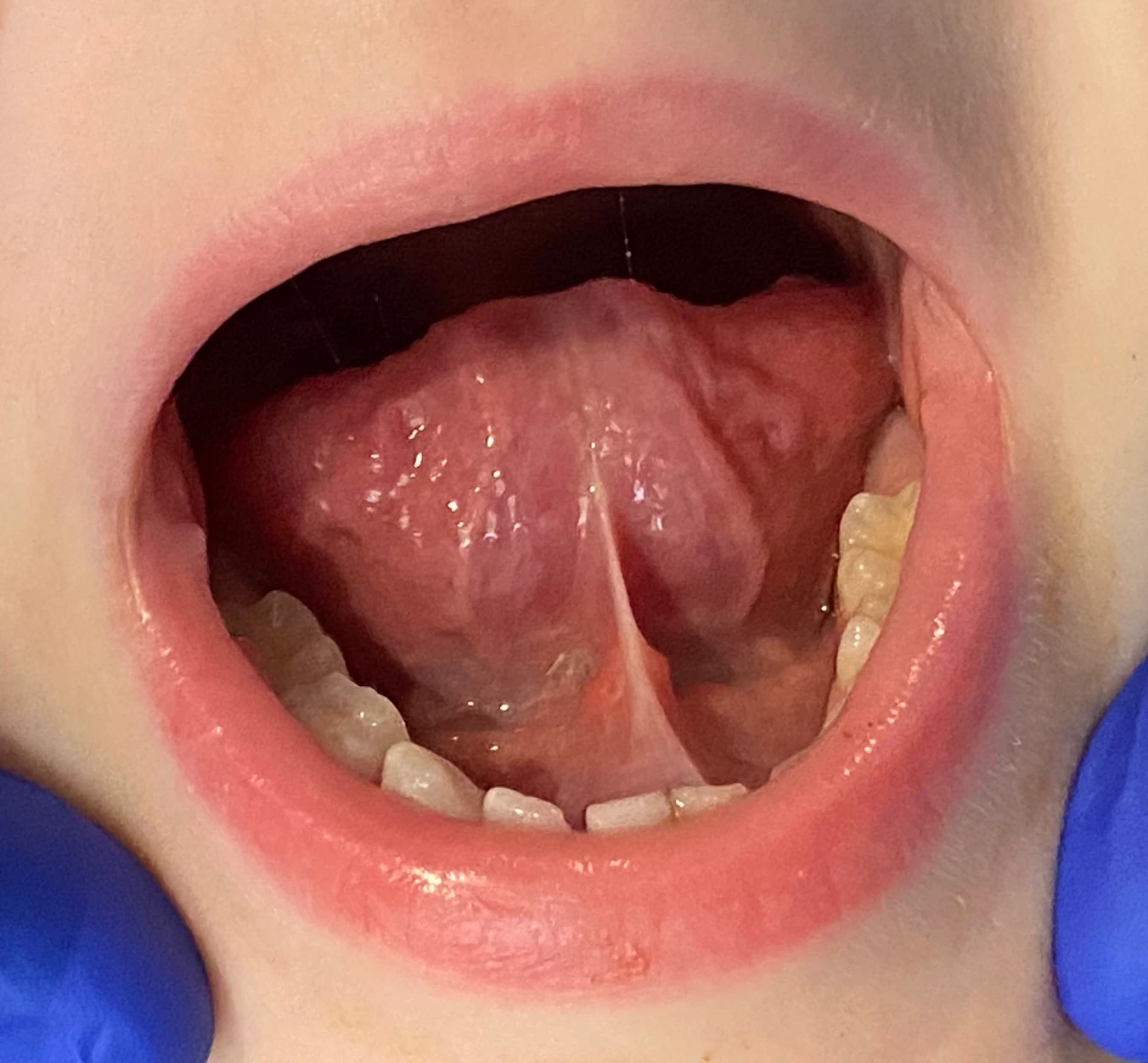
Tongue-ties and lip-ties love to show up as a pair. A tight upper lip-tie makes it harder to flange and seal, while a restricted tongue-tie makes it tough to lift and move milk or food properly. When both are present, the feeding battles get even harder – more air swallowing, more reflux, slower weight gain, and more frustration for everyone.
Many families come in thinking it’s “just a tongue-tie” only to discover the lip-tie is adding its own layer of trouble. We assess both during every consult because a frenectomy for lip-tie combined with tongue-tie release (when needed) gives the cleanest, most complete results. One quick laser procedure can address the full picture so your child can finally eat comfortably.

Better is possible.
We use advanced laser technology for a precise, quick, sedation-free lip and tongue-tie surgery – a frenectomy for lip-tie that fully releases the restriction. No scissors, no guessing. Just a clean release that lets the lip (and tongue, when needed) move the way they were meant to.
Meet your guides

Dr. Richard Baxter

Dr. Brigitte Trego

Incredible progress we’ve seen
- Babies finally get a deeper latch with less leaking and less pain for mom.
- Reflux, gas, and colic calm down because baby isn’t swallowing so much air.
- Toddlers stop fighting tooth-brushing and start smiling big with those front teeth.
- Speech sounds that were tricky become clearer.
- Kids just seem happier and more comfortable overall.
Here’s exactly how it works
Schedule a Consult
Get a Complete Assessment
Support Your Current Team
Ready to help your child eat, smile, and thrive?
- Schedule A Consult today. Or take our quick quiz to assess your child’s symptoms in under a minute.
- We see families from Birmingham, all over Alabama, and even from across the country because results like these are worth the trip. One visit is usually all it takes.
- You’ve got good instincts. Trust them. We’re here to turn that “something feels off” feeling into real relief.
Frequently Asked Questions
How to tell if baby has lip tie?
Look for a tight upper lip that won’t flange outward, milk leaking from the corners of the mouth, clicking during feeds, or a gap between the front teeth as your child grows. If feeds feel frustrating or inefficient, it’s worth getting checked by a pediatric dentist for lip-tie.
What does a lip tie look like?
When you lift the upper lip, the frenulum often pulls tight and blanches the gums. In newborns the lip stays curled under; in toddlers it can make the top teeth hard to brush or create a visible space between the centrals.
Does lip tie affect feeding?
Yes. A restrictive lip-tie prevents a good seal, so babies take in extra air and have trouble transferring milk efficiently. This leads to longer feeds, more fussiness, reflux, and sometimes slower weight gain.
Can a lip tie affect speech?
It can limit the movement needed for certain sounds (especially B, P, M, W). Many parents notice clearer speech after a proper frenectomy for lip-tie.
Are lip ties genetic?
They often run in families. If you or siblings have had a tie, your baby has a higher chance of having one too.
How long does recovery take after frenectomy for lip tie?
With our laser technique, most babies and toddlers heal quickly - usually within 1-2 weeks for the main discomfort to pass, with full healing in a few weeks. We give you simple stretches to do at home.
We often treat tongue-tie and lip-tie together - why?
Because they frequently occur as a team and feed off each other. Releasing both at once in a lip and tongue-tie surgery gives the best functional improvement so your child can latch, swallow, and move the mouth comfortably.
What is a lip-tie in babies?
Every baby has some frenulum tissue under the upper lip. In a true lip-tie, that tissue is abnormally restrictive. It stops the lip from flaring outward and creating a proper seal. Some are thin and stringy. Others are thick and cord-like.
Lip-tie problems later in life
Left alone, a lip-tie can make brushing the top teeth a daily battle, contribute to early decay, or leave that persistent gap between the front teeth. The earlier you catch it, the less your child has to struggle.
Take the Quiz
Alabama Tongue-Tie Center
Dr. Richard Baxter & Dr. Brigitte Trego